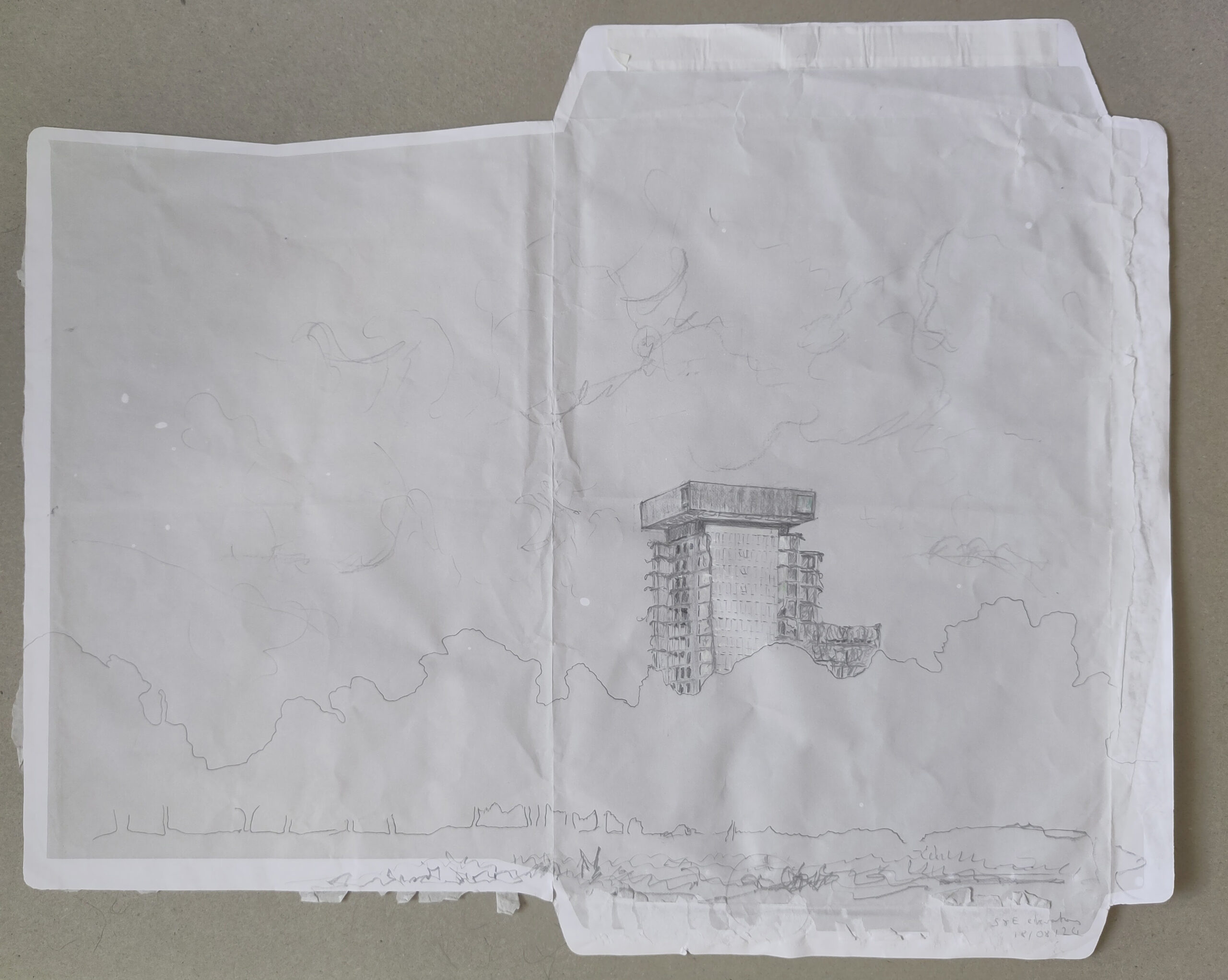
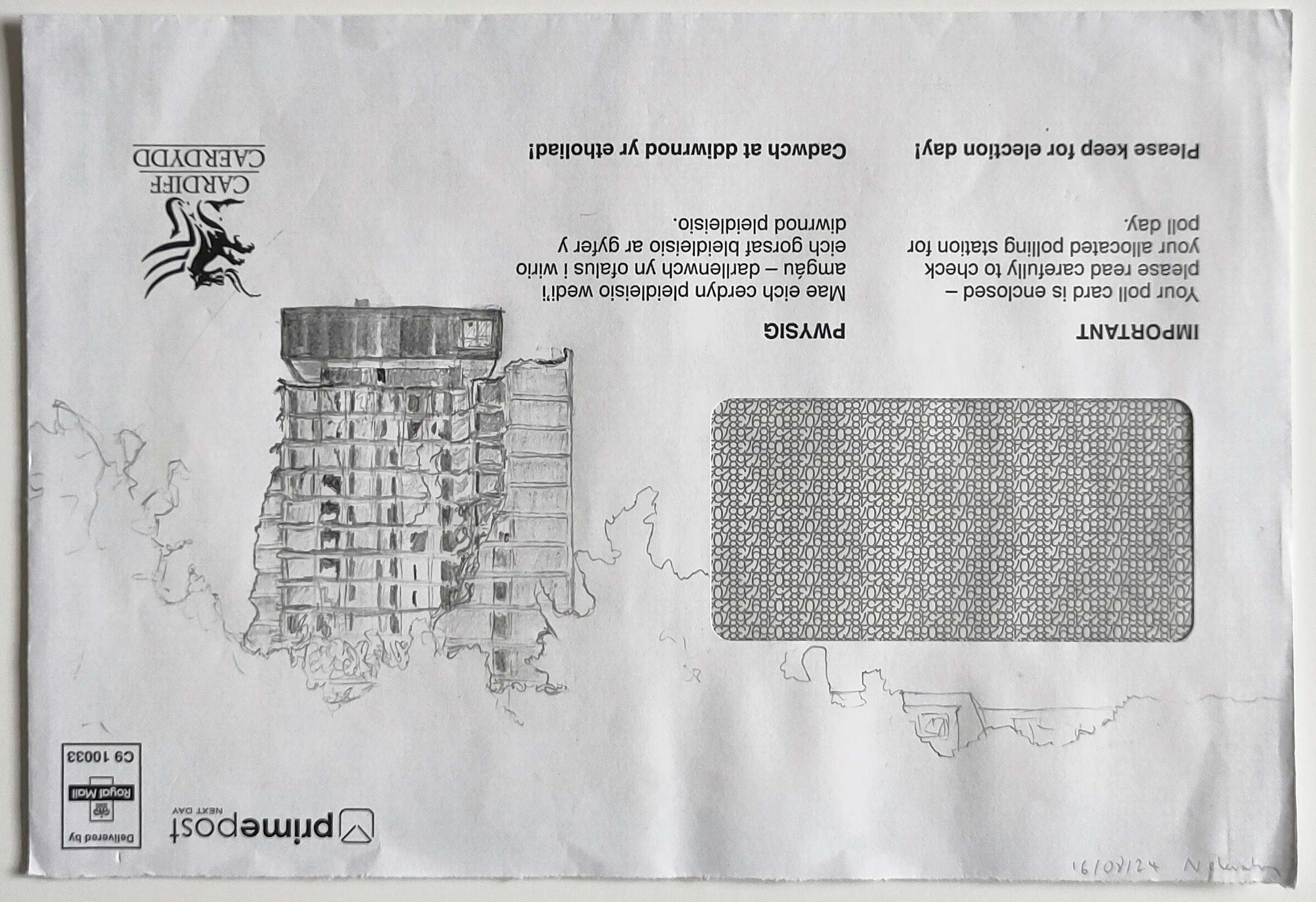
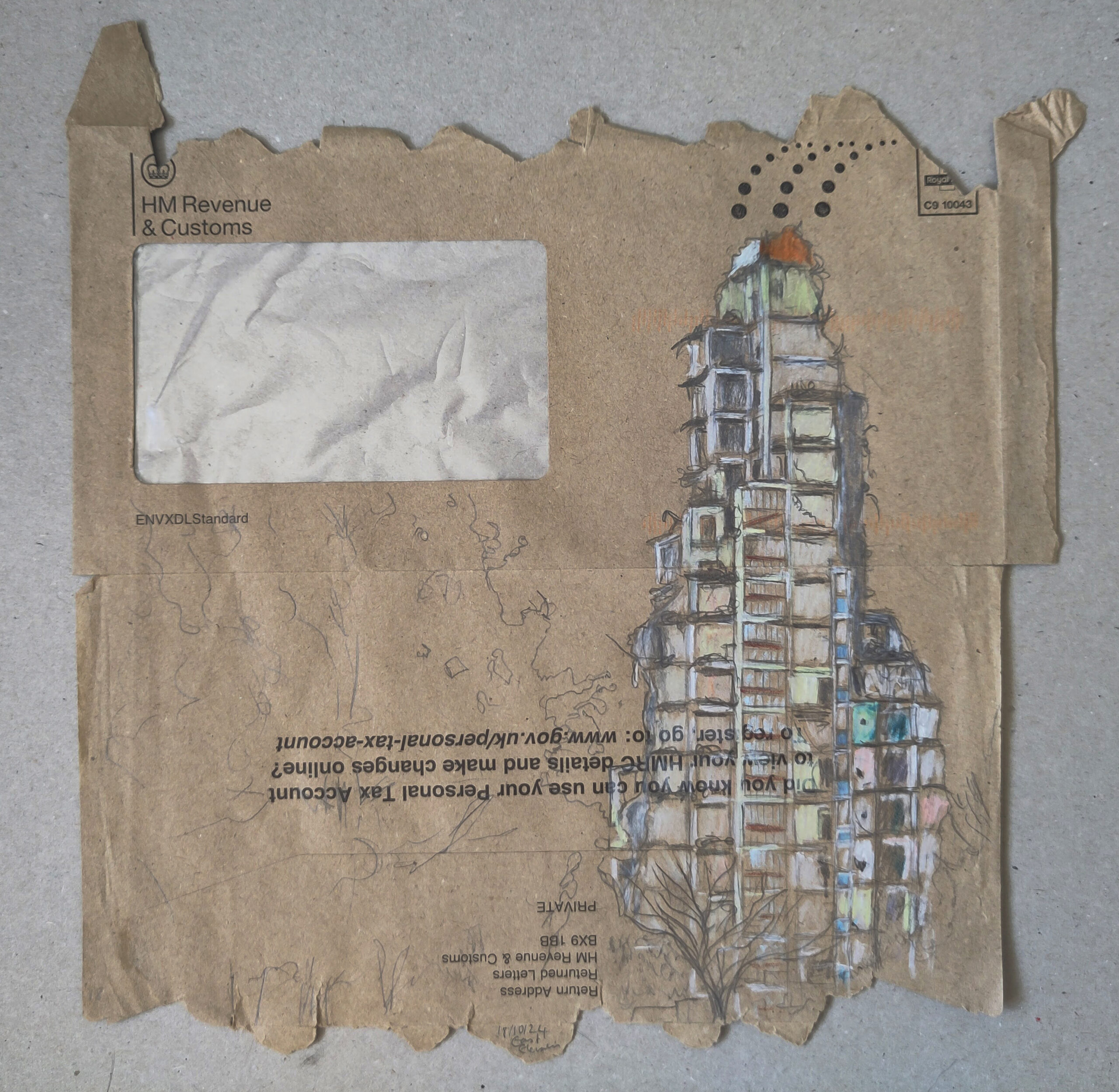
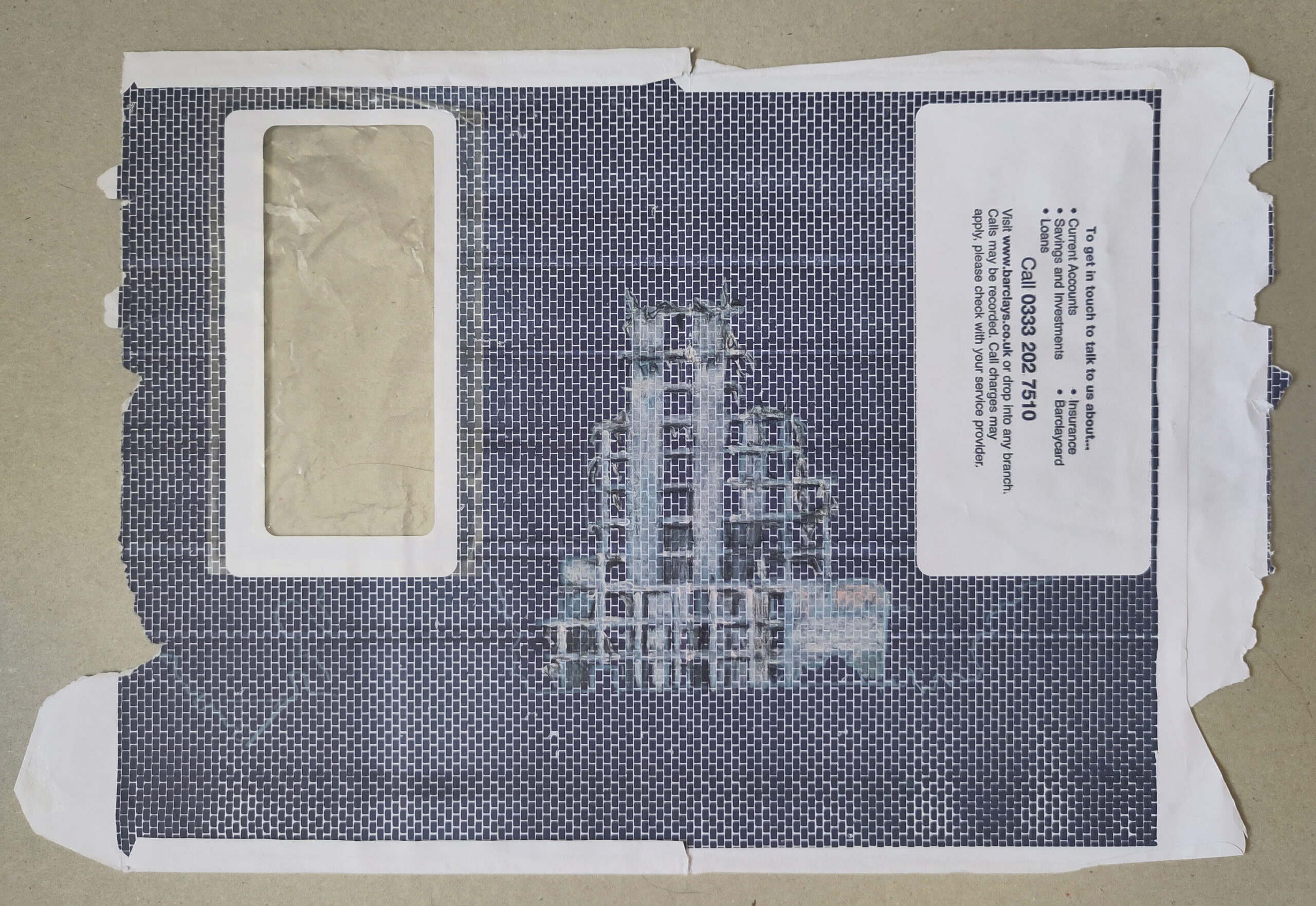
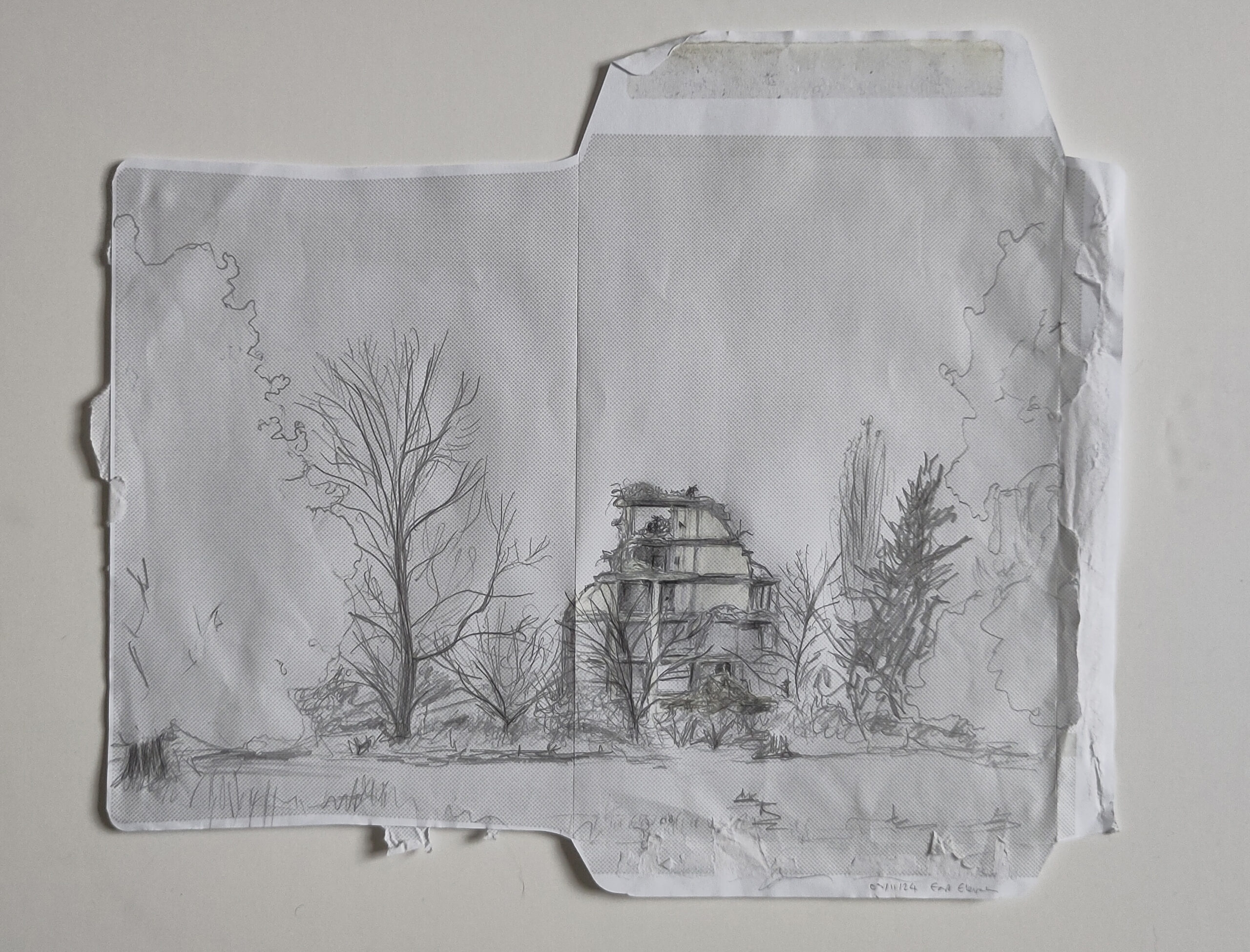
The Tax Office Series (9 of 70)
2024
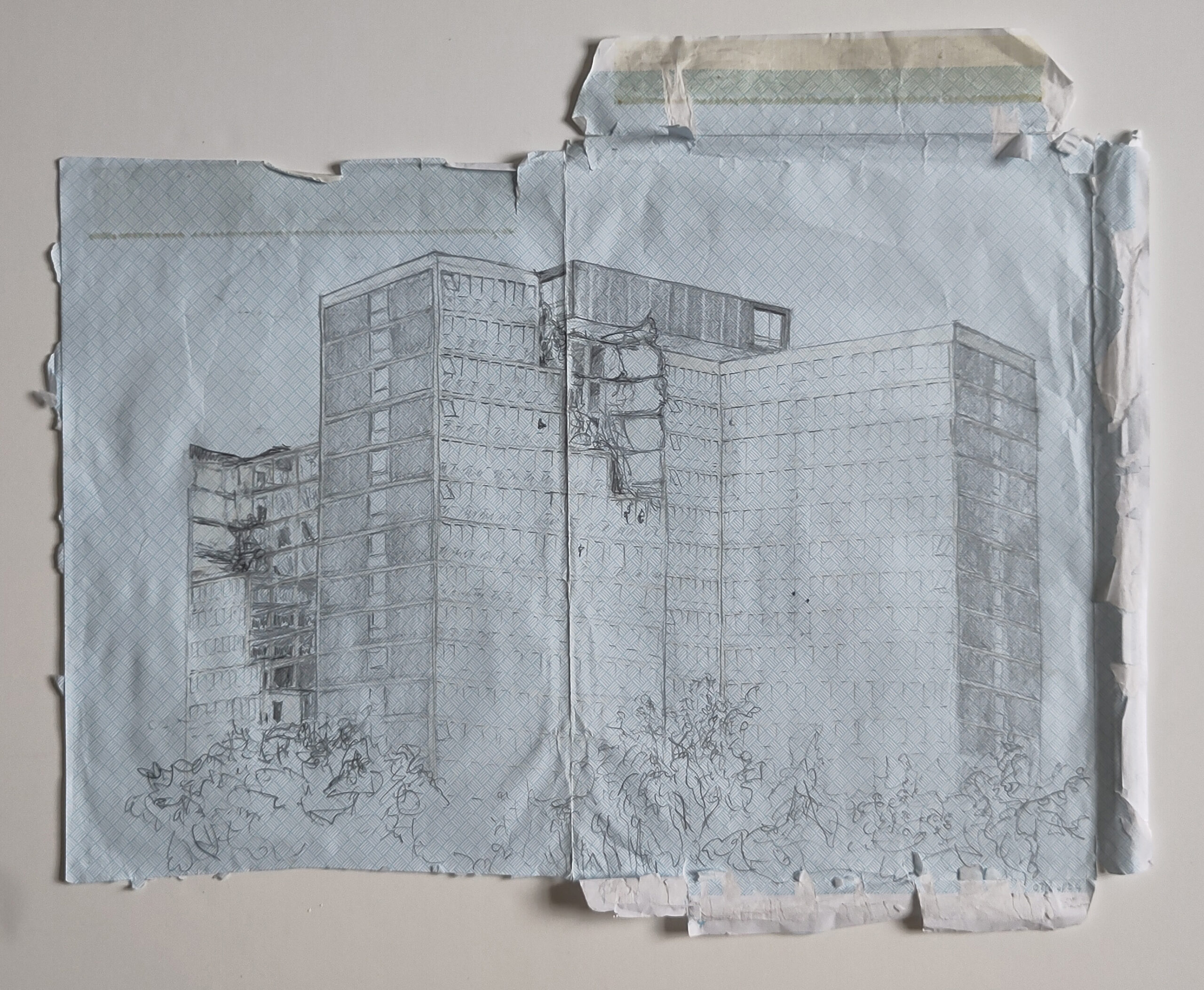
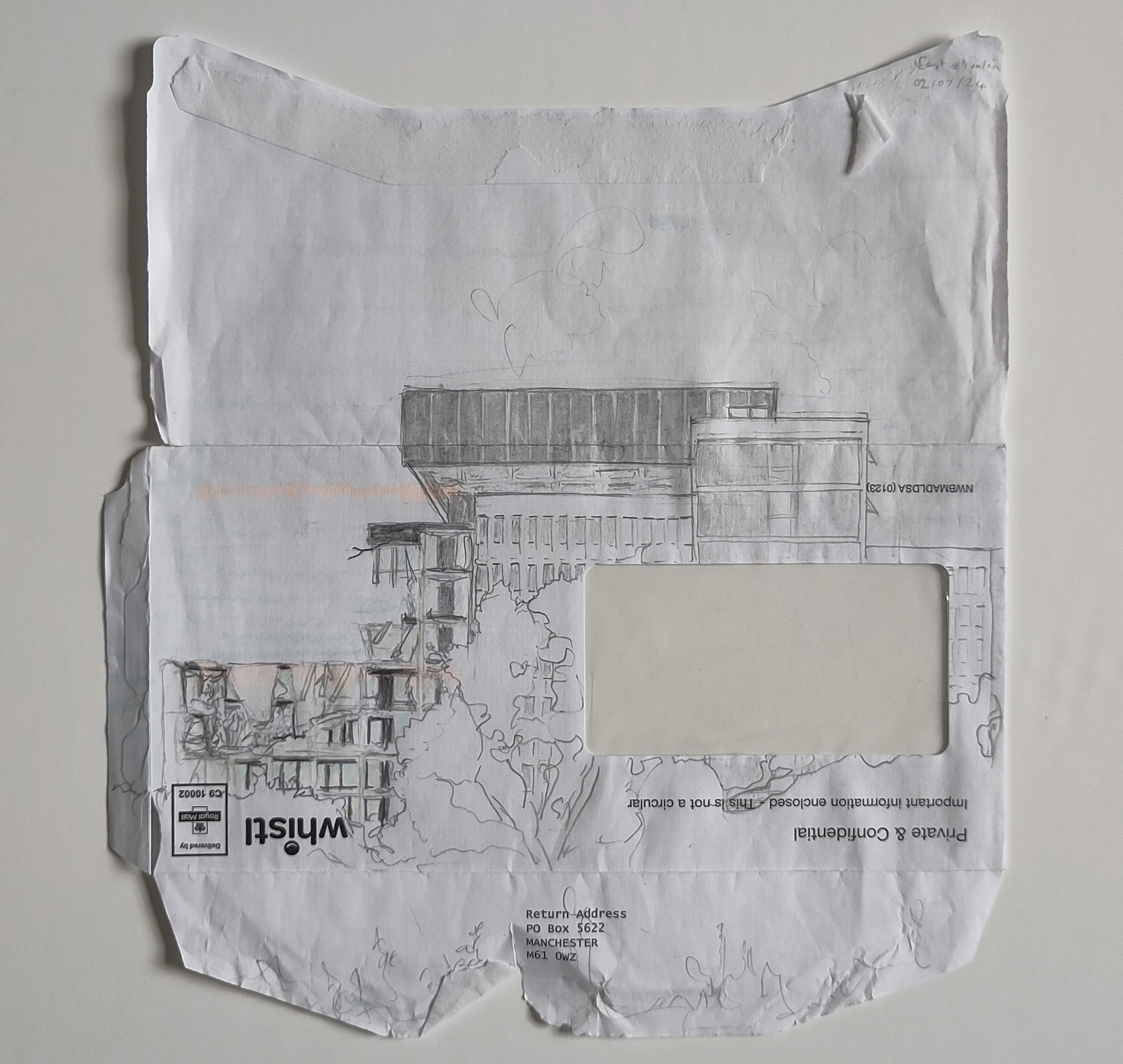
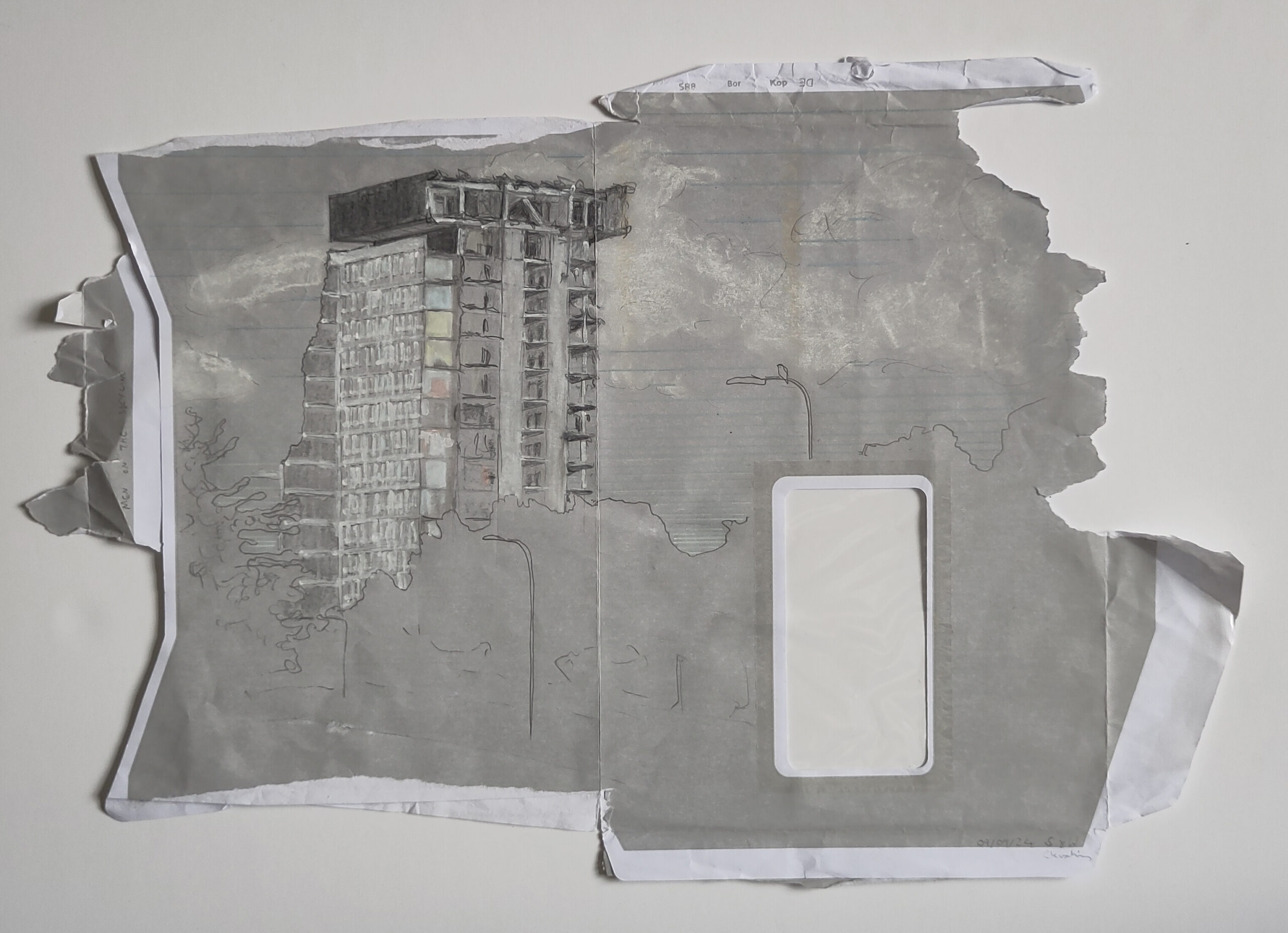
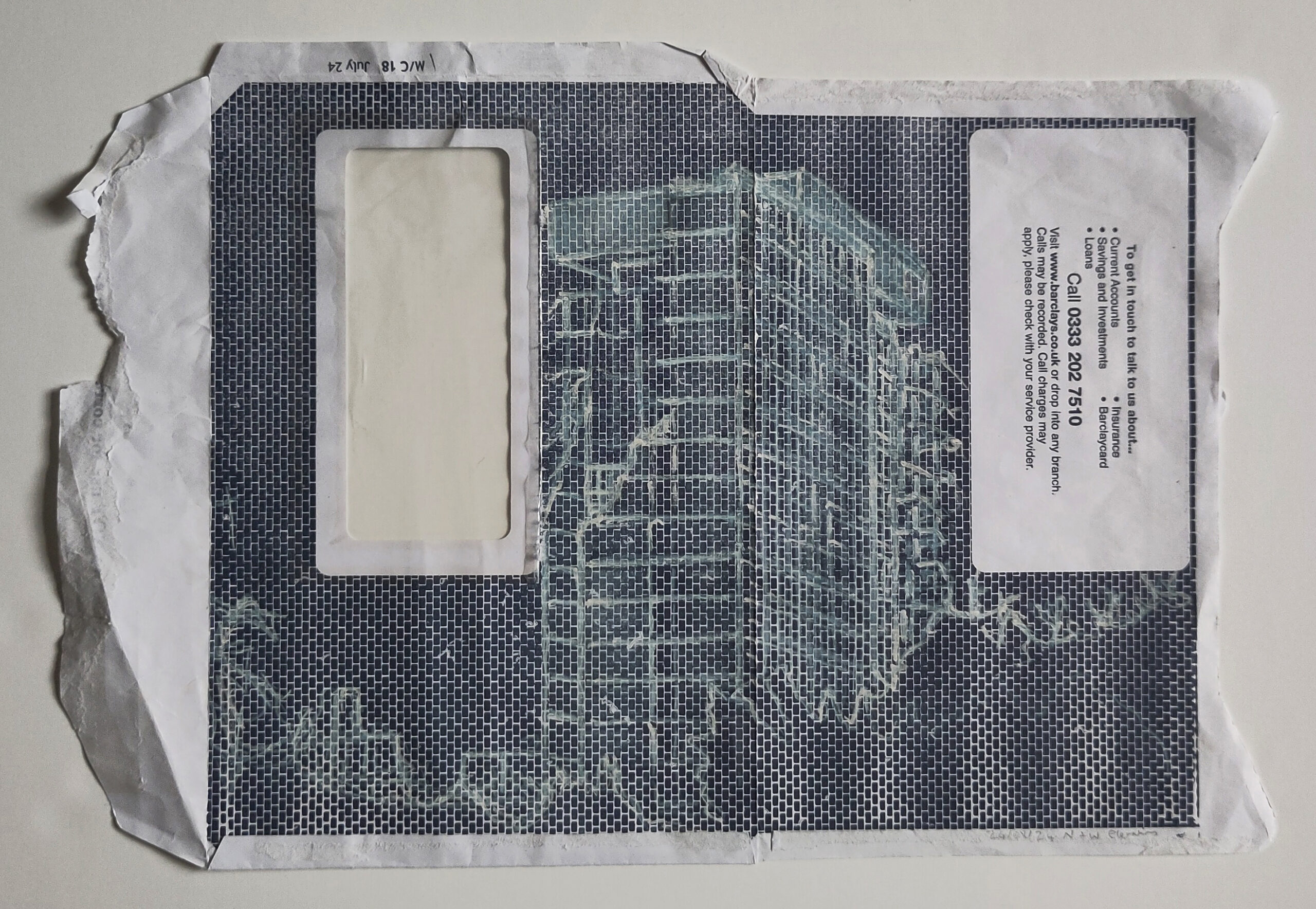
Pencil, coloured pencil and chalk/ pastel on used envelopes
Envelope sizes B6 – A4
The Tax Office Series documents the demolition of ‘Phase 2’ an 18 storey tower block – part of the HMRC site built in 1960s in Llanishen, north Cardiff. An iconic building, one of the few high-rises outside the city centre, it always fascinated me. Tall, grey and boxy; sticking out like a brutalist thumb from a different era with shiny windows, shimmering in the morning and evening light. A previous hub of administration and workplace for 3000 in its heyday, it was demolished very slowly, between June – October 2024. When I began, I didn’t know it would take so long. I drew on the inside of envelopes (a nod to the administrative history) in the street in all weathers, on my way to work, at weekends, making over 70 drawings. Whilst drawing, I spoke to a lot of people locally, hearing about their affection for the building, a shared fascination in seeing it come down so slowly, and the pride some people had had in their jobs there.
The building came down slowly and carefully, revealing its inner structure and colour schemes (institutional neapolitan pastels). Drawings became less about surface and volume, more about structure and texture. And the question – how do you draw loss?
This quiet landmark has disappeared, along with its grey, gold, concrete geometry.
The Tax Office also features in Tax Office Collages and Distant Places (N&W)I
Read about the use of grids in drawing and shaping the world, in my article Drawing with Grids: A Framework for Imagination on the Artuk website.